Project case study
Xélle.ng
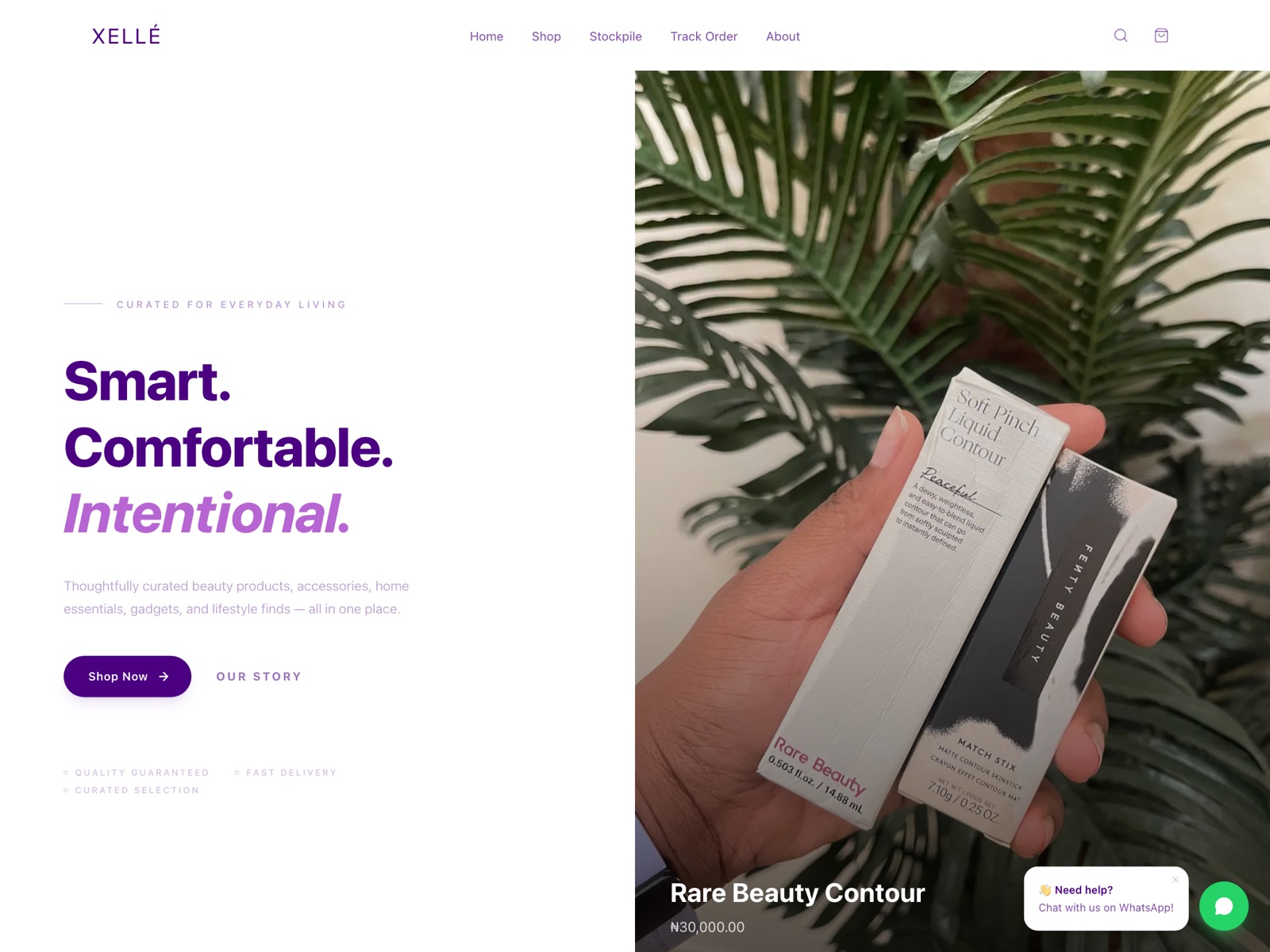
An online store for a Nigerian high-end lifestyle brand, built from start to finish. Customers can shop, pay and follow their order with confidence, and the brand never has to worry about overselling or losing track of a payment.
- My role
- Solo developer: product design, storefront, admin, database, payments and emails, working directly with the brand.
The problem
The brand was selling through DMs and bank transfers, so it was hard to know what was still in stock, who had paid and where each order was. For a premium brand, every one of those gaps showed up as a worse experience for the customer.
What I built
- 01A storefront for shopping, searching and checking out, priced in naira. Stock that stays accurate, even when many people are buying at once. Stockpile: customers can buy over a couple of weeks and get everything in one delivery. Delivery options across Lagos and other states, including doorstep or pickup. Simple payment by bank transfer or WhatsApp, with order updates by email. Reviews from verified buyers. An admin where the brand runs orders, stock, discounts, customers and site content.
How it works
- 1
Browse
Customer shops the catalogue; prices and stock come live from Postgres.
- 2
Order
Checkout goes through the order queue, which deducts stock atomically.
- 3
Pay
Customer pays by bank transfer or WhatsApp; the admin confirms it.
- 4
Ship
Delivery fee is set by zone; the order ships now or waits in a stockpile.
- 5
Follow up
Status emails go out at each step, then a verified review link after delivery.
My approach
The brief was simple: payment problems and overselling should never be the brand's problem. Every decision came back to that. I treated stock and payments as things that had to be right every time, even on the busiest sales day, and built everything else around them. I also built the shop around how Nigerian customers already like to buy, through bank transfers, WhatsApp and grouped deliveries, instead of forcing them into a checkout designed for somewhere else.
Results & lessons
The brand now sells from its own store instead of chasing payments and stock through messages, and runs the day-to-day itself. The main lesson was that a store earns trust through reliability: customers notice when a "sold out" item still sells or a payment goes missing. Designing around local habits did more for the experience than any extra feature.