Project case study
Zuta ya
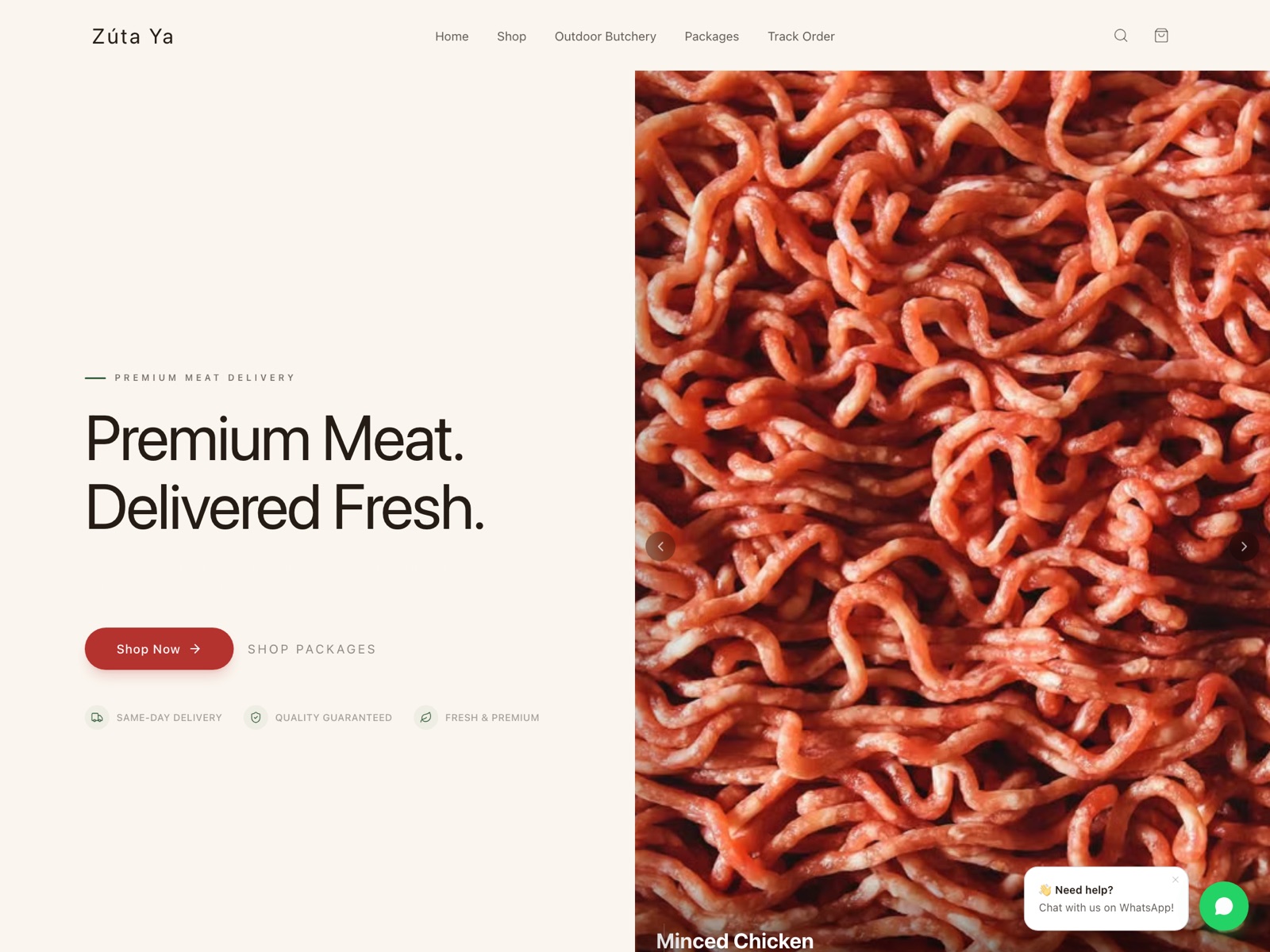
ZúTa Ya started as a meat delivery brief and grew into something much larger. By the time it shipped, it was a unified platform handling a storefront, butchery services, a grill house menu, event bookings, subscriptions, and a full operations backend all in one codebase.
The problem
A Lagos meat business was running four businesses at once (a shop, a grill house, butchery and event services, and subscriptions), and every one of them had to share the same stock, money and delivery slots without anything going out of sync.
What I built
- 01One codebase for the shop, packaged meat boxes, the Kitchen grill-house menu, outdoor butchery, Owambe event planning and bookings.
- 02Atomic order creation in one Postgres transaction: it locks rows, deducts stock and rolls everything back if anything is short.
- 03A Paystack payment ledger that records every attempt. Verify, webhook and cron race safely, and only the one that wins runs fulfilment.
- 04Automatic payment recovery: a reconciliation cron, stock that restores exactly once, and one-time resume links for abandoned checkouts.
- 05Overpayments and underpayments refunded automatically, with an append-only event log for every payment.
- 06Recurring meat-box subscriptions charged on saved Paystack authorisations.
- 07Cost snapshotted on every order line, so margin and COGS stay accurate when supplier prices change.
- 08A 25-route admin covering orders, payments, disputes, delivery capacity, newsletters, an audit log, cron logs and analytics.
How it works
- 1
Cart
Cuts and packages go into the cart; packages expand into the real stock they use.
- 2
Order
create_order_atomic locks rows, deducts stock and saves the order in one transaction.
- 3
Pay
Paystack popup; verify, webhook and cron race, and one atomic update decides the winner.
- 4
Fulfil
The order is confirmed, a receipt is emailed and the admin is notified within 30 seconds.
- 5
Recover
Abandoned payments: stock restored once, customer emailed a resume link.